


RFID Keyfob
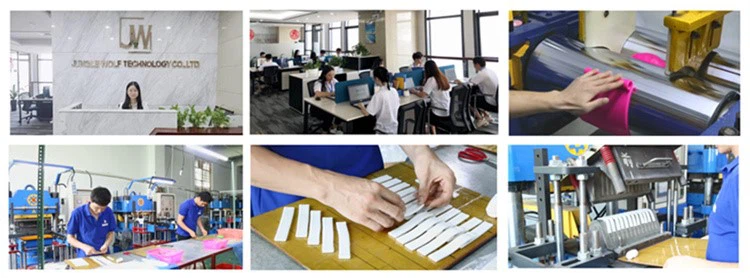
RFID Keyfob Manufacturing
Why Buyers Choose Jungle Wolf
Global Compliance & Certifications
Compliant with CE, FCC, and RoHS standards; materials meet medical/industrial safety requirements (REACH, Prop 65). Equipped with AES-128 encryption and anti-tamper alerts for high-security applications like access control and payment systems.
01
Advanced Production Capacity
Producing over 10 million RFID keyfobs monthly, with flexible order quantities starting at 500 units and 15-day rapid turnaround. Customizable shapes (keychain/disc), surface finishes (laser engraving/UV coating), and chip integrations (125kHz/13.56MHz/UHF) tailored to diverse needs.
02
Technical Expertise
Specializing in multi-frequency compatibility (LF/HF/UHF) and anti-metal solutions (e.g., ceramic-based keyfobs with 12m UHF read range). Supports dynamic memory rewriting for real-time loyalty program updates and IoT integration.
03
Cost Efficiency & Logistics
Leveraging conductive ink printing to reduce material costs by 30%, bulk orders enjoy 15% discounts. Strategic partnerships with DHL/FedEx ensure 7-day delivery to Europe and North America, balancing quality and cost-effectiveness.
04
Post-Sale Support
Offering 3-year warranties, 100% replacement for defective batches, and 24/7 multilingual technical assistance. Dedicated project managers for OEM/ODM orders, including NDA compliance and IP protection.
05
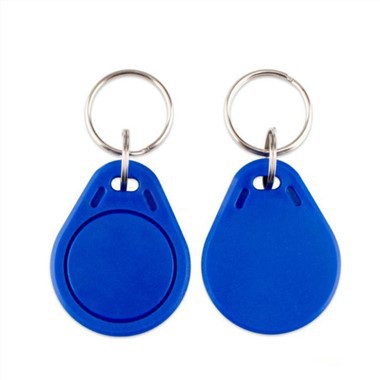


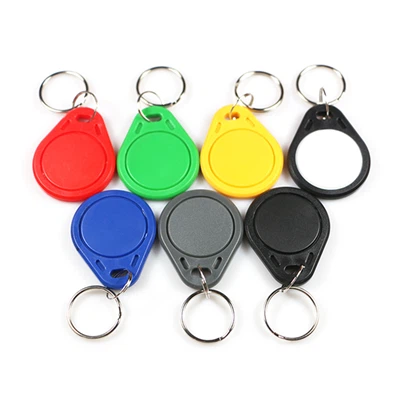


RFID Keyfob Definition
An RFID Keyfob is a small, secure hardware device that utilizes Radio Frequency Identification (RFID) technology. It integrates a microchip and antenna to exchange data with readers wirelessly. Encapsulated in materials like ABS plastic or epoxy resin, it features waterproof, dustproof, and shock-resistant properties, making it widely applicable in access control, identity authentication, payment systems, logistics tracking, and other fields.
RFID Keyfob Classification

RFID ABS Keyfob
Material & Manufacturing:
The casing is made of ABS plastic, with the chip and coil encapsulated via ultrasonic welding. Epoxy resin is often injected internally to enhance sealing.
Supports surface treatments: silk screening, UV coating, laser engraving, allowing customization of corporate logos or personalized patterns.
Core Features:
Durability: Resistant to high temperatures (-20°C to 75°C) and impacts, ensuring long service life.
Compatibility: Works with mainstream chips like 125kHz (EM4100/T5577) and 13.56MHz (NTAG213/MF50).
Applications: Ideal for industrial access control, parking lot management, and attendance systems requiring robust durability.
Typical Dimensions: L34×W27×T5mm, lightweight (approximately 5-10g), designed to hang on keychains.
RFID Epoxy Keyfob
Material & Manufacturing:
The chip and coil are embedded directly into epoxy resin, forming an integrated irregular-shaped card. The surface can be printed with text, patterns, or QR codes.
Supports multi-frequency chips (LF/HF/UHF), such as EM4102, Mifare 1K, and NTAG216.
Core Features:
Lightweight: Thinner design (3-5mm), suitable for embedding in cards, phone cases, or hanging as accessories.
Waterproof & Dustproof: IP67/IP68 protection rating, ideal for humid or outdoor environments.
Customization: Supports flat printing and irregular-shaped designs, perfect for VIP membership cards, event tickets, and mobile device accessories.
Typical Dimensions: L50×W30×T3.5mm (square) or L65×W25×T4.2mm (rectangular).

Core Advantages of RFID Keyfobs
Convenience:
Enables contactless operations (e.g., unlocking doors, vehicle ignition) via wireless RF signals, supporting remote control through mobile apps.
Facilitates bulk reading for scenarios like logistics sorting and warehouse management.
Security:
Employs encryption technologies (e.g., AES-128) to prevent data tampering and supports dynamic passwords and tiered access permissions (e.g., employee-level access control).
Operates effectively in metal-rich environments (e.g., industrial workshops, parking lots) with anti-interference capabilities.
Durability:
Waterproof and dustproof (IP67/IP68 ratings), resistant to high temperatures (-20°C to 75°C), ideal for harsh outdoor conditions.
No mechanical wear parts (e.g., button-free design), ensuring long service life.
Scalability:
Compatible with multi-frequency bands (LF/HF/UHF) and customizable features (e.g., NFC integration, biometric authentication) for diverse needs.

Typical Application Scenarios
Access Control & Security
Replaces traditional keys for office buildings, residential complexes, and secure facilities.
Used in hospitals for patient identification and lab safety zones.
Transportation & Vehicle Management
Enables keyless entry/ignition for vehicles (e.g., PEPS systems) and automated parking toll systems.
Supports toll collection (ETC) and parking lot management.

Logistics & Warehousing
Automates inventory tracking and shipment sorting, reducing human error.
Enhances container tracking in ports and cross-border logistics.
Consumer & Loyalty Services
Acts as hotel room keys, VIP membership cards, or event tickets with anti-counterfeit features.
Integrates with loyalty programs for real-time point updates.
Production and Deployment Process
Requirement Analysis & Design:
Define functional needs (read range, encryption level), form factor (keychain, card, custom shape), and target application.
Hardware Selection & Development:
Choose chips (e.g., EM4100, NTAG213) and frequencies (125kHz/LF or 13.56MHz/HF). Design antennas and encapsulate chips in ABS plastic or epoxy resin.
Integrate components like buttons or LED indicators.
Software Development & Testing:
Develop firmware (e.g., BLE protocols) and communication protocols (ISO 14443, ISO 15693).
Validate read/write range, anti-interference performance, and environmental resilience (e.g., humidity/heat tests).
Mass Production & Customization:
Mold ABS cases, embed chips, and encapsulate. Offer surface treatments (laser engraving, UV coating) for branding.
Provide SDKs for clients to develop custom applications (e.g., ERP integration).
Deployment & Maintenance:
Install readers (fixed/handheld) and configure access databases.
Offer post-deployment support (firmware updates, tag replacement) and dedicated project managers for OEM/ODM orders.
FAQ

01.What is an RFID Keyfob?
02.How does an RFID Keyfob work?
03.What types of RFID Keyfobs are available?
By Material:
ABS Plastic: Durable, heat-resistant, suitable for industrial use.
Epoxy Resin: Waterproof, slim design for embedding in cards or devices.
04.How secure are RFID Keyfobs?
Encryption: Advanced algorithms (e.g., AES-128) protect data from tampering.
Anti-Cloning: Unique encryption keys prevent duplication.
Dynamic Authentication: Temporary codes for one-time use.
05.Can RFID Keyfobs be customized?
Yes. Customizations include:
Appearance: Logos, colors, shapes (via laser engraving or UV printing).
Functionality: Integration with NFC, biometrics, or sensors.
Chips: Compatibility with EM4100, NTAG213, or custom frequencies.
06.What is the lifespan of an RFID Keyfob?
Passive Keyfobs: Up to 10+ years (no battery).
Active Keyfobs: 3–5 years (battery-dependent).
Environmental Resistance: IP67/IP68 ratings for waterproofing and dustproofing.