


RFID Microchip
RFID Microchip Innovators
Quanzhou Jungle Wolf Technology Co., Ltd is a leading RFID solutions provider specializing in high-performance RFID microchips
Unmatched Durability
Built with medical-grade materials and corrosion-resistant coatings, these microchips thrive in extreme temperatures (-10°C to +50°C) and harsh environments, ideal for industrial, agricultural, or outdoor applications.
Multi-Frequency Versatility
Supports 125 kHz (LF), 13.56 MHz (HF), and UHF (860–960 MHz) frequencies, enabling applications from contactless payments to livestock tracking and cold-chain monitoring.
Customizable Solutions
Fully customizable in size, shape (oval/circular), and surface finishes (laser engraving, QR codes), with options for encryption and IoT integration to meet unique industry needs.
High-Speed Bulk Processing
Achieves 1,300+ tags/sec read rates, ensuring rapid inventory scans or event management while maintaining accuracy in high-density environments.
Global Compliance & Safety
Certified with CE, FCC, RoHS, and FDA, ensuring adherence to international standards for safety, environmental responsibility, and data integrity.
End-to-End Support
Offers free samples, technical troubleshooting, and 24/7 after-sales service, backed by a dedicated engineering team for seamless integration and long-term reliability.


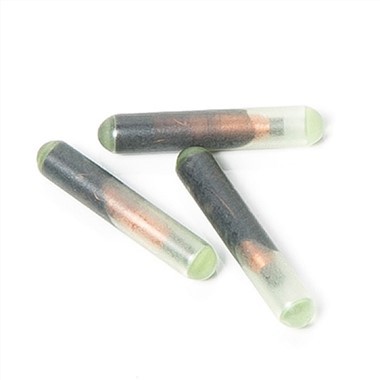


What is RFID Microchips
RFID microchips (Radio Frequency Identification Microchips) are tiny electronic devices that enable contactless identification via radio frequency signals, widely used in animal management, industrial tracking, healthcare, and other fields. Based on encapsulation methods and application scenarios, they are primarily divided into two categories.

RFID Animal ID with Syringe
Purpose: Specifically designed for animal identity management, these microchips are implanted under the animal’s skin via a syringe to provide lifelong unique identification.
Technical Specifications:
Frequency: 134.2 kHz (compliant with ISO 11784/11785 standards).
Encapsulation: Biological glass material with an anti-slip coating to prevent detachment after implantation.
Storage Capacity: 256–512 bits of readable/writable memory, storing data such as animal ID and vaccination records.
Accessories: A detachable syringe (with needle) sterilized via ethylene oxide (EO) to meet medical standards.
Application Scenarios:
Pet Management: Tracking lost pets and managing vaccination history.
Livestock Farming: Livestock traceability and disease prevention.
Wildlife Conservation: Population monitoring and protection.
RFID Glass Tag
Purpose: Suitable for industrial, medical, or high-temperature environments, these tags use glass encapsulation to achieve high-temperature resistance and corrosion resistance.
Technical Specifications:
Frequency: Supports low-frequency (LF, 125–134 kHz) or high-frequency (HF, 13.56 MHz), compatible with ISO 15693 standards.
Encapsulation: Borosilicate glass or tempered glass, with a temperature resistance range of -40°C to +200°C, suitable for sterilization environments.
Form Factor: Can be designed as ear tags, implantable tags, or surface-mounted labels, supporting read/write functions.
Typical Scenarios:
Medical Devices: Tracking sterilized surgical instruments or implanted medical devices.
Food Industry: Meat traceability and anti-counterfeiting for pharmaceutical packaging.
Industrial Manufacturing: High-temperature tool management and equipment status monitoring.

RFID Microchip Product Features & Details
RFID Microchip Product Features & Details
1. High-Quality Implantation Needle
Material: Crafted from high-purity stainless steel, the needle features a flat beveled tip and an optimized blade angle for smooth penetration, minimizing insertion pain and tissue trauma.
Design Advantages:
Precision-engineered for minimal resistance during skin penetration, ensuring quick and efficient implantation in pets (e.g., cats, dogs, small animals).
Single-use design to eliminate cross-contamination risks.
2. Medical-Grade Polymer Carrier (Microchip Housing)
Material: Constructed from medical-grade polyvinyl chloride (PVC) or biocompatible polymers, meeting ISO 10993 biocompatibility standards for safety, non-toxicity, and eco-friendly properties.
Structural Features:
Miniaturized Design: Compact dimensions (typically 10–15mm × 2mm, similar to a grain of rice), ideal for implantation in small pets like puppies, kittens, or rabbits.
Durability: Resistant to stretching, aging, and body fluid corrosion, with a service life of up to 20 years to match a pet’s lifetime needs.
Sustainability: Uses recyclable or biodegradable materials (depending on the model), aligning with green manufacturing practices.
3. High-Performance Bioglass-Encapsulated RFID Chip
Chip Composition:
Encapsulation Layer: Medical-grade bioglass (e.g., borosilicate glass) ensures robust chemical stability and a hermetic seal, protecting internal circuits from body fluid erosion.
Core Unit: Integrates a passive RFID microcircuit (operating at 134.2kHz or ISO 11784/11785 standard frequencies) with a unique identification code (UID) and expandable user data storage (e.g., pet ID, owner contact, vaccination records).
Performance Benefits:
Longevity: Sterilized via 24-hour ethylene oxide (EO) gas treatment for safe implantation; no battery required (passive RFID) ensures lifelong functionality.
Reliability: Stable read range (10–30cm, depending on reader power) and strong interference resistance, performing reliably in body temperature and moisture environments.
4. Sterile Independent Packaging
Packaging Design: Each microchip is individually wrapped in medical-grade sterilized packaging (medical paper/PE composite film), meeting ISO 11607 standards for medical device packaging.
Hygiene Features:
Contains desiccants and humidity indicators to maintain a sterile environment (microbial limit ≤10 CFU/piece) during storage and transport.
Ready-to-use design—no additional disinfection needed; the microchip and needle are pre-assembled in the package to prevent component loss.
User-Friendly Support: Includes an implantation guide with step-by-step instructions (e.g., pet restraint, disinfection procedures, optimal implantation sites) to lower operational barriers for veterinarians or pet owners.

How Does Animal Microchip Work
Animal microchips are small, implantable devices that store a unique identification (ID) code to help reunite lost pets with their owners. Below is a step-by-step guide on how they work:
1. Verify Existing Microchip (if any)
First, use a microchip scanner to check if the animal already has an implanted microchip. The scanner emits a low-radio-frequency signal that activates the microchip if present, displaying the stored ID code.
2. Confirm Microchip Functionality
Before implantation, scan the microchip’s packaging to ensure it is operational. The scanner should read the ID code on the microchip, which must match the barcode label provided in the packaging to confirm accuracy.
3. Implant the Microchip
The microchip is inserted under the animal’s skin (typically between the shoulder blades) using a specialized applicator, similar to a hypodermic needle. After implantation, immediately rescan the animal to confirm the microchip is detectable and properly positioned.
4. Record the Tracking Number
Document the microchip’s unique tracking number (provided on the packaging and scanner display). Register this number with a national pet recovery database (e.g., AVID, HomeAgain) along with your contact information to ensure the pet can be identified if found.
Implantation Sites for Microchips
Microchips are implanted in specific locations depending on the animal (see diagram):
Dogs/Cats: Typically between the shoulder blades (most common site).
Small Mammals (rabbits, guinea pigs): Behind the neck or between the shoulder blades.
Livestock/Horses: In the neck or shoulder area.
Birds: Under the wing or along the back.

Frequently Asked Questions
FAQ of RFID Microchip Innovators
What makes Quanzhou Jungle Wolf a leader in RFID microchip innovation?
+
-
Quanzhou Jungle Wolf combines advanced manufacturing capabilities with customizable solutions tailored to diverse industries. Our products feature waterproof, dustproof, and high-temperature resistance designs, supported by certifications like CE, FCC, and RoHS. We specialize in silicone RFID wristbands, PVC/NFC tags, and livestock microchips, ensuring compatibility with LF (125 kHz), HF (13.56 MHz), and UHF (860–960 MHz) frequencies.
What RFID frequencies do your microchips support?
+
-
Our products cover multi-frequency bands:
LF (125 kHz): Ideal for access control and animal tracking.
HF (13.56 MHz): Suitable for contactless payments and data-rich applications.
UHF (860–960 MHz): Offers long read ranges (up to 10 meters) for logistics and large-scale tracking.
How do you ensure product reliability and durability?
+
-
Material Quality: Silicone and PVC components undergo strict quality control to withstand harsh environments (-10°C to +50°C).
Encapsulation: Biocompatible glass or military-grade polymers protect internal circuits from corrosion and physical damage.
Certifications: ISO 9001-certified manufacturing and third-party testing for ESD and RF performance.
Can I customize the design of your RFID microchips?
+
-
Yes! We offer full customization services, including:
Logo/Serial Number Printing: Silk-screen, laser engraving, or UV printing.
Chip Selection: Choose from TK4100, EM4305, Alien H3, or custom ICs.
Packaging: Bulk orders with branded packaging and free samples for first-time clients.
What industries benefit most from your RFID solutions?
+
-
Retail & Events: Cashless payments, attendee tracking (e.g., conferences, gyms).
Healthcare: Patient ID tags and medical equipment tracking.
Agriculture: Livestock identification and farm management.
Logistics: Warehouse asset tagging and anti-counterfeiting.