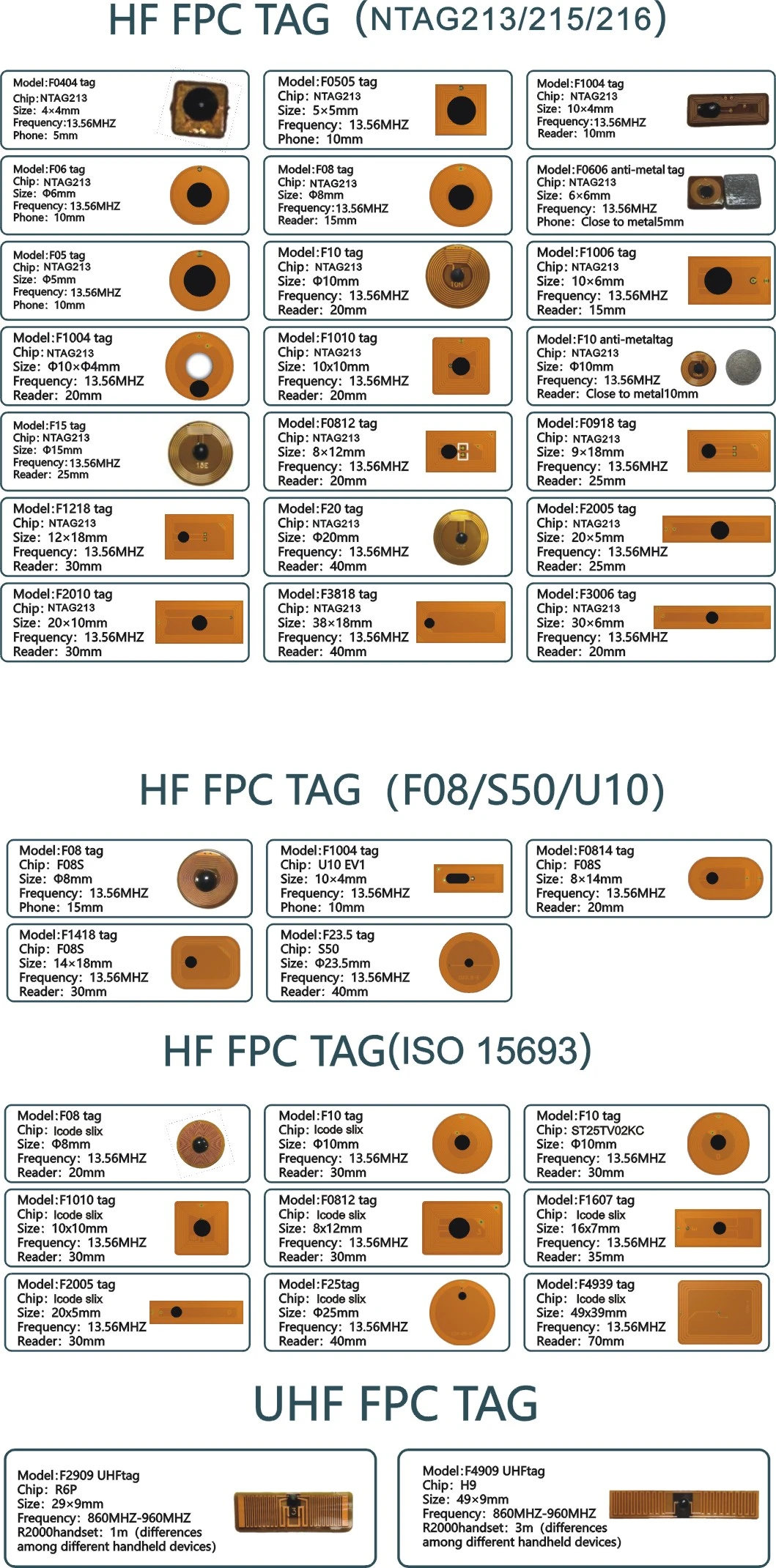
As smart consumer electronics keep shrinking in size, traditional bulky RFID labels can no longer fit compact‑form‑factor products such as eyeglasses, small wearable accessories and slim‑profile hardware. Ultra‑thin FPC RFID tags stand out as a practical NFC identification solution for tiny‑sized goods. Boasting light weight, slim profile and outstanding toughness, these flexible FPC tags can be embedded or pasted inside eyeglass frames and narrow product housings. Beyond simple asset tracking, they enable smartphone‑tap functions: one‑tap web redirect, product authenticity verification and digital business‑card exchange. With strong adhesive bonding and highly‑sensitive chip induction, FPC RFID tags open new possibilities for anti‑counterfeiting, interactive marketing and intelligent identification for consumer‑grade compact products.
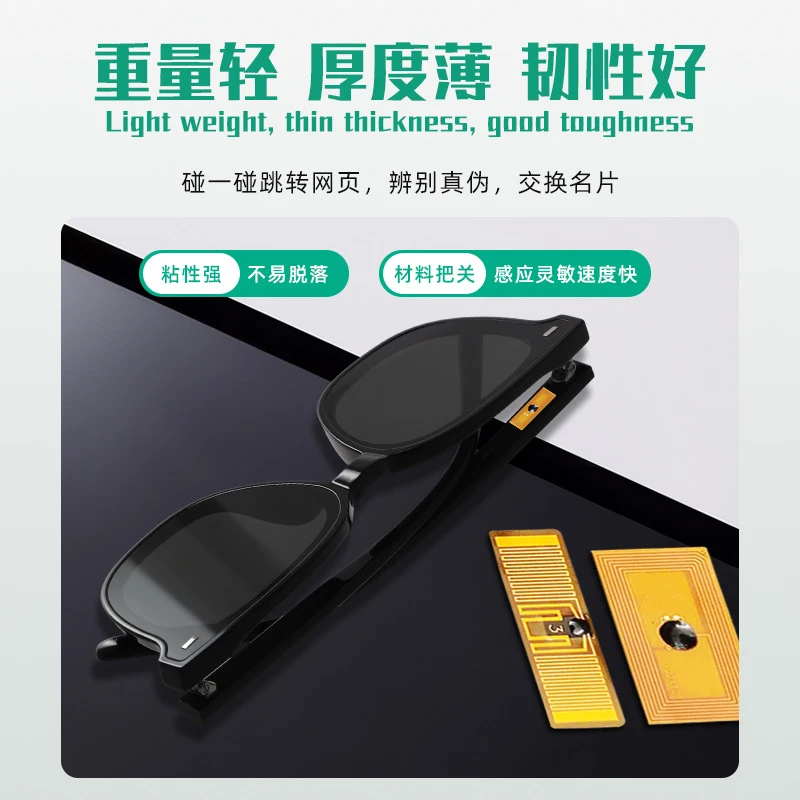
Consumer electronics and wearable accessories are trending toward slimmer, lighter and more compact designs. For product makers, integrating RFID or NFC functions into narrow internal spaces has long been a real challenge. Ordinary sticker‑type NFC labels are often too thick, stiff or fragile. They are difficult to install inside eyeglass temples, small‑size housings and limited‑gap components, and may easily fall off after assembly.
Flexible FPC RFID tags solve this industry bottleneck perfectly. Manufactured on high‑performance polyimide substrate, these tags feature three core merits: light weight, ultra‑thin thickness and excellent toughness. Different from rigid RFID components, they tolerate mild bending without damaging internal etched antenna circuits. This makes them well‑suited for embedding within eyeglass frames and other slim consumer goods without adding bulk or interfering with product assembly.
Practical smartphone‑tap NFC functions bring added commercial value to end products. After pre‑configuration, end‑users simply tap their NFC‑enabled phone against the embedded FPC RFID tag. Supported interactions include instant redirection to brand web pages, quick genuine‑counterfeit authentication, and one‑tap digital contact exchange. Brands can deliver product manuals, promotional content or after‑sales information directly to consumers' mobile devices without extra hardware.
Two key practical properties guarantee stable real‑world performance. First, equipped with high‑strength backing adhesive, FPC RFID tags deliver strong bonding performance. They stay firmly attached to plastic frames and inner housing surfaces, resisting detachment during daily assembly and long‑term usage. Second, strict raw‑material quality control ensures highly responsive and sensitive induction. Reading remains fast and consistent even when the tag is hidden inside product structures.
Beyond smart eyewear scenarios, this category of thin FPC RFID tags can extend to sunglasses, hearing‑aid accessories, small‑sized wearable gadgets, high‑end jewelry and compact electronic parts. Manufacturers can deploy them for brand anti‑counterfeiting, interactive consumer marketing, production‑line traceability and finished‑goods inventory management.
For brand owners and OEM factories, FPC RFID tags support customized dimensions, antenna layout and chip programming services. Project teams can select suitable tag shapes and sizes according to actual internal mounting space of their products. Pre‑encoding services are available to write URLs, authentication data and custom information into tag chips before shipment.
As interactive NFC‑driven consumer experiences keep growing, ultra‑thin tough FPC RFID tags will become a preferred hardware option for compact‑size smart products, bridging physical goods and digital content.
If you are sourcing FPC RFID tags for eyewear or miniature consumer‑product projects, contact our team for technical datasheets and sample testing.
FAQ
Q1: Can FPC RFID tags fit inside eyeglass frames?
A: Yes. Thanks to ultra‑thin thickness and good toughness, FPC RFID tags can be embedded within eyeglass temples and narrow inner spaces. Gentle bending is allowed during installation without breaking internal antenna.
Q2: What functions can be realized by tapping a phone on these FPC tags?
A: After chip pre‑programming, NFC phones can trigger web‑page jump, product authenticity verification check, digital business‑card sharing, or load product introduction and after‑sales information.
Q3: Will the tag fall off after being pasted inside plastic eyeglass frames?
A: Our FPC RFID tags adopt high‑strength adhesive. When applied to clean plastic surfaces, they maintain strong adhesion and resist dropping under normal usage conditions.
Q4: What frequency do these FPC RFID tags work on?
A: These are 13.56 MHz HF NFC tags complying with ISO 14443‑A standard, compatible with mainstream NTAG series chips, readable by most NFC‑equipped Android and iPhone mobile phones.
Q5: Can I customize tag size to match my eyeglass internal space?
A: Yes. We provide custom size and shape service for FPC RFID tags to fit various narrow mounting spaces. Custom orders are subject to MOQ requirements. Standard in‑stock sizes are available for quick sampling.
Q6: Does embedding the FPC tag affect normal use of eyeglasses?
A: Proper‑size ultra‑thin FPC tags will not influence wearing experience or structural assembly when reasonably placed inside frame internal reserved space.
Q7: Can FPC tags be used for product anti‑counterfeiting?
A: Absolutely. Each tag carries unique chip identifier. Combined with backend system, brands can achieve reliable genuine‑fake identification for eyewear and other high‑value compact consumer goods.
Q8: Do you offer samples for eyewear project validation?
A: Sample service is available. You may test tag dimension, bending performance, adhesive effect and NFC tapping functions on your prototype products before bulk order.